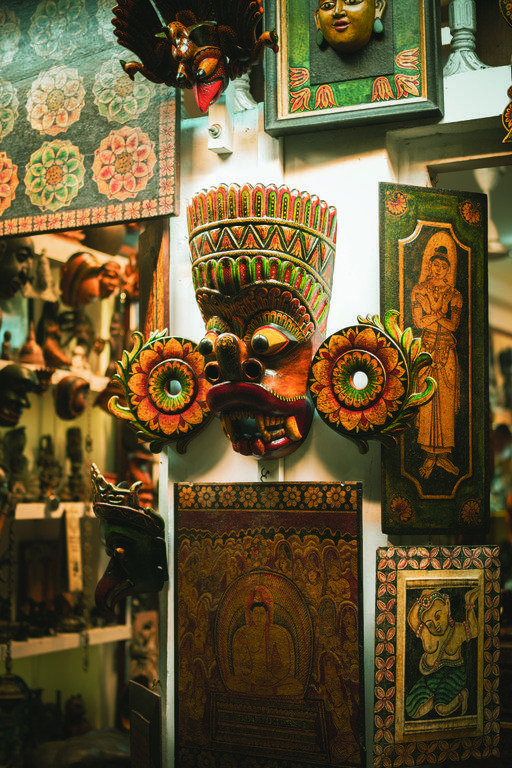
Ves Munu or Ves Muhunu translates from Sinhala as “covered face” or “character face.” Both meanings are true. These masks conceal the human face while making visible the unseen forces that govern illness, fortune, and divine protection. For centuries, communities across Sri Lanka, particularly in the south, have carved, painted, and performed with them — weaving masks into rituals of healing, exorcism, folklore, and festivity.
Origins
The history of Sri Lankan masks stretches back to at least the 15th century. Tradition points to Ruhunu Rata — the Southern Province — as the birthplace of the island’s two most prominent mask dance forms: Sanniyakuma and Kolam. Influences arrived from Kerala and Malabar in South India, but local artisans transformed them, enriching the craft with vibrant colours and intricate ornamentation entirely their own.
Today the undisputed capital of mask culture is Ambalangoda, a town on the south-western coast, home to workshops, galleries, and the celebrated Mask Museum where craftsmen still carve by hand as their ancestors did.
The Three Types of Masks
Ritual Masks
The oldest and most powerful category. Used in healing ceremonies and exorcism, they are worn by a practitioner called the edura. The most famous are the eighteen Sanni masks, each linked to a specific illness — blindness, epilepsy, cholera, paralysis, and more — and used in the Sanniyakuma Devil Dance to summon and placate the demon believed to cause that ailment. All eighteen are presided over by the fearsome Maha Kola Sanniya, the supreme demon lord.
Performance Masks
The Kolam dance tradition brings folk tales to life in a form resembling theatre, with characters ranging from kings to comic demons. Raksha (demon) masks — wild-eyed and tongue-out — appear in processions and village festivals to ward off evil.
Decorative Masks
Many Sri Lankans hang masks above doorways as protective talismans. The peacock-inspired Mayura Muhuna invites peace; the fiery Ginidella wards off malevolent energy; the serpent-crowned Naga Raksha repels danger. Each mask carries a specific protective purpose.
The Craft
Masks are carved from Kaduru wood; a light, fine-grained timber well suited to intricate work. After shaping, they are finished in bold, saturated paint — reds, oranges, yellows, and greens — colours chosen to be seen across a ritual space by torchlight. A single elaborate mask can take weeks, passing through the hands of a carver, a detail artist, and a painter.
A Living Tradition
Authentic healing rituals have diminished in recent decades, but the craft itself endures. In Ambalangoda and villages like Henegama, skilled artisans continue the old methods, preserving designs and meanings that have survived for generations. For visitors, a Ves Muhunu mask is often the most resonant thing they carry home — not merely for its beauty, but for the story and belief carved into every feature.