Etched Dye
By Gethmini Gihansa
The Beautiful Story of Sri Lankan Batik: Where Wax Meets Wonder
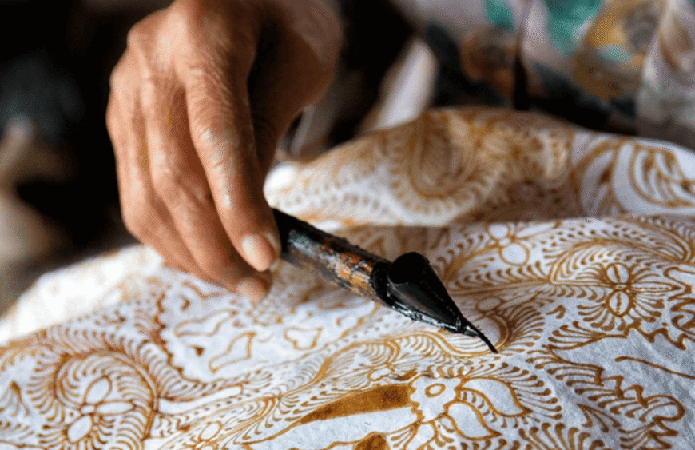
Picture this: an artisan sits in a sun-drenched studio, meticulously guiding a tiny copper tool across a white fabric. Hot wax flows from its spout, creating delicate patterns that will tell a story. That is batik and in Sri Lanka, it's so much more than just making pretty cloth.
What Makes Batik So Special?
In Javanese, the word “batik” means “writing with wax.” The technique involves applying hot wax in cloth, using a tool called a “canting”. It is more like a tiny copper teapot with a spout. What happens here is when the fabric is dipped in the dye; the waxed parts resist the colour. In other words, it creates art by protecting certain areas rather than painting them. Depth and complexity are created by layers and layers of wax, and each and every layer reveals something new.
It’s a bit poetic when you think about it—the technique creates beauty through what you shield, but not by what you add.
From Palace Walls to Your Wardrobe
Back in the days, batik was not always for everyone. It was an art practiced by aristocratic women who created ceremonial fabric for the royalty in the old Kandyan kingdom in central Sri Lanka. Eventually skilled artisans started mastering the art of the batik craft, weaving in Sri Lankan symbols like elephants, lotuses, peacocks and the Tree of Life—each telling stories of home and heritage.
Ena de Silva is a prominent character in the history of Sri Lankan batik craft. Born in 1922 into an elite Kandyan family, Ena was chosen to represent the “Spirit of Lanka” when Ceylon (now Sri Lanka) gained independence in 1948. She just didn’t stop being a symbol. She became revolutionary.
In 1960, when renowned architect Geoffrey Bawa designed her home in Colombo, she set up her batik studio. She then developed her own signature technique—a triple waxing method that created a unique depth. And in 1961, she held her first “pavement sale.” Even though it sounds humble, it was the start of something huge.
Over time, she gained recognition for her work, and her batik tapestries were everywhere that mattered—from Bawa’s iconic Bentota Beach Hotel to the Sri Lankan Parliament and her work even traveled to Expo ’70 in Osaka and found home in hotels worldwide.
Her greatest achievement? The establishment of the Aluwihare Heritage Centre in 1980s, where she employed hundreds of local women by teaching them not just batik, but carpentry and embroidery too. Decades before sustainability became a buzzword; she was creating empowerment through artistry.
Colours from the Garden
It’s connection with the island’s natural beauty is what makes Sri Lankan batik so unique. For centuries, dyers have extracted colours from their surroundings…Turmeric for sunny yellow, indigo for deep blues, madder root for reds, neem for both colour and healing properties.
The tradition of dyeing robes of Buddhist monks with natural colour goes back 2,550 years in Sri Lanka. Those ancient practitioners knew that certain plants don’t just create beautiful colours, they can be medicinal and antimicrobial.
Today Sri Lankan companies are extracting dyes from furniture industry waste and tea waste, creating sustainable colour palettes that are recognized worldwide. “Warna by Mahogany” was named as a Top innovation at ISPO Textrends and “T Hues” offers 52 colours with a negative carbon footprint. It’s indeed a beautiful combination—ancient knowledge turned into modern innovation.
Why Batik Matters More Than Ever?
The world now is increasingly concerned about the environmental impact of fashion. The natural and traditional way in batik looks incredibly smart: natural materials—cotton, silk, and plant-based dyes, labour intensive, not resource intensive, village-based production that creates jobs for rural women and preservation of cultural heritage which is also economically viable.
When you wear Sri Lankan batik, you are not just wearing beautiful fabric. You are supporting artisan communities by helping to preserve an endangered craft and participating in a tradition that has survived colonialism, globalisation, and fast fashion.
Every fold of batik fabric carries the history of island kingdoms, artistic revolutions, and cultural pride. To wear it is to carry that story forward—not written in ink but etched in wax and sealed in dye.
We live in a world that moves fast and there’s something comforting about wearing art that takes time, care, and the patient hands of someone who learned their craft from someone before them, who learned it from someone before them, going back generations.
That’s the real magic of Sri Lankan batik. It connects us to the past, to each other, and to something beautiful that refuses to be rushed.