
Diamond In The Dust
By Thishana Rajanayake
Discovering Extravagant Simplicity in Galle's Colonial Embrace
In a country where tuk-tuks rattle past ancient temples and fishermen balance on stilts in turquoise waters, luxury doesn't announce itself with fanfare. Instead, it whispers through the corridors of restored colonial mansions, reveals itself in the measured pour of Ceylon tea, and materializes in the gentle breach of a blue whale against the horizon. This is Sri Lanka's south coast, where Galle Fort stands as a testimony to refined indulgence hidden within humble island life.
History dressed up for the camera
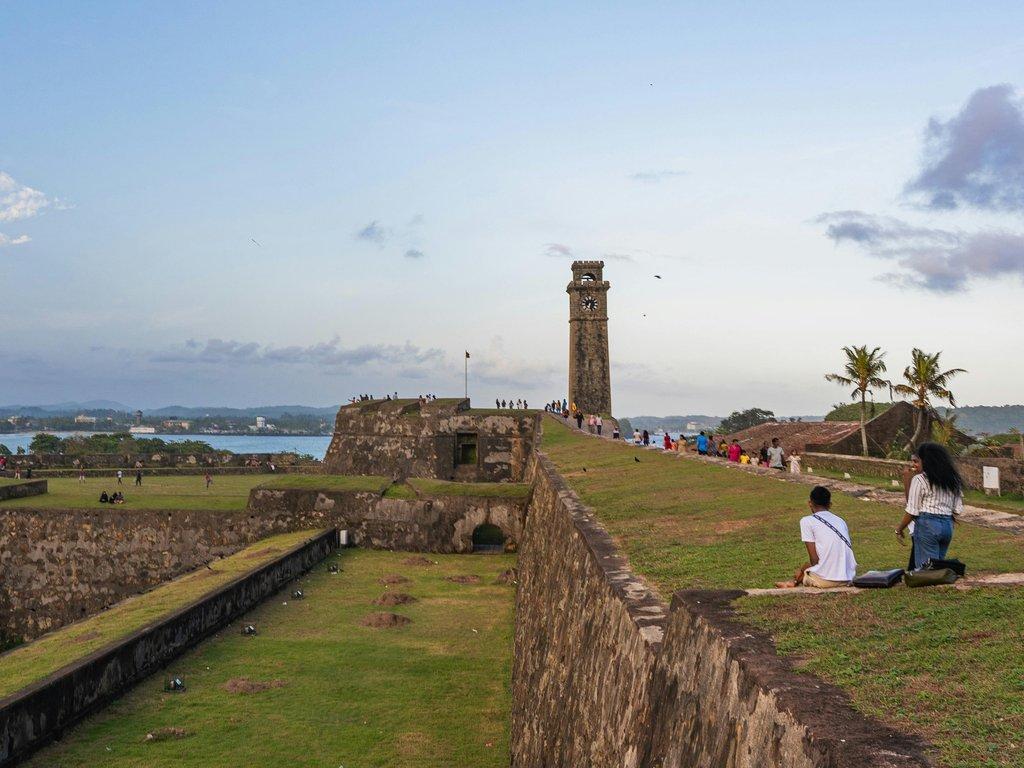
Why pictures? Because Galle’s magic is partly visual: a shutter click can turn a simple street into a postcard. For photographers and Instagram wanderers, dawn and dusk are rituals — fishing boats line the harbour in silhouette, and the Fort’s ramparts become a promenade for lovers, stray cats and the seasonal birds.
If you are a traveller, walk through the imposing gates of Galle Fort and let time collapse. Built by the Portuguese in 1588 and meticulously fortified by the Dutch throughout the 17th century, this UNESCO World Heritage Site isn't a preserved relic, it's a breathing neighbourhood where 400 families still call home.
Little rituals, big frames: Seafood, stilt fishermen and Rumassala
Some of the most cinematic shots are the simplest: an old man repairing a net at sunrise, stilt fishermen poised like living sculptures off the coast, or a chef’s hands at work preparing a midday curry. Day trips from Galle bring you to turtle hatcheries, mangrove canals and the mystical Rumassala hills. Each stop offers a palette of colours and textures that make your camera sing. These vignettes anchor the luxury: they are reminders that extravagance here is quiet, tactile and human.
Pedlar Street: A Canvas You Can Walk Through
If Galle Fort is the diamond, Pedlar Street is its glint. A slow wander here feels like walking through a living gallery. Colonial facades; buttercream, sage, and weathered white, open into art studios, independent bookstores, antique stores and cafés scented with Ceylon cinnamon.
Paintings lean casually against walls… Contemporary Sri Lankan canvases splash tropical blues and fiery reds across minimalist interiors. Hand-woven textiles hang like flags of forgotten kingdoms. Brass curios, carved wooden masks, handmade lace and ceramic bowls wait patiently.
And the joy? You can take these stories home. A painting rolled gently into your suitcase. A handcrafted necklace that smells faintly of polished wood. A linen dress bought from a tiny boutique where the owner tells you about her grandmother’s sewing machine.
Luxury here is personal. It is handmade. It has fingerprints.
The Gentle Monarchs of the Ramparts
Then, there are the cats! They belong to no one and to everyone.
Golden-eyed and sun-warmed, they drift through the Fort like quiet guardians of its secrets. One naps on a Dutch windowsill. Another stretches lazily across a warm stone wall overlooking the sea. Some wander confidently into boutiques, brushing against silk skirts and linen trousers as though inspecting the merchandise.
In the evenings, they gather on the ramparts, silhouettes against a melting orange sky.
Photographers adore them. Writers find metaphors in their lazy elegance. Travellers simply fall in love.
When the Fort Turns Into a Festival
Just when you think Galle is all quiet nostalgia, it surprises you. Throughout the year, its cobbled streets transform into intimate celebrations of culture.
The internationally celebrated Galle Literary Festival draws writers, thinkers and dreamers from across the world: conversations spill from heritage halls into café terraces. Poetry readings echo through old Dutch buildings. Ideas travel as freely as the sea breeze.
But beyond the headline events, there is a constant rhythm of smaller magic:
Acoustic music nights in hidden courtyards. Open mic evenings where travellers and locals share stories. Pop-up art exhibitions inside restored villas. Sri Lankan cooking classes where spices perfume the air and hands learn the rhythm of curry leaves hitting hot oil.
The Fort does not need grand arenas. Its charm lies in intimacy. A dozen chairs, a string of lights, a guitar, a glass of arrack, and suddenly you are part of something beautifully unplanned.
In Galle, even a Tuesday night can feel like a festival.
Giants of the Deep
Picture this: the plane banking gently, the pilot pointing down, and there breaking the surface, a blue whale exhaling, its blow visible from hundreds of feet up, the sleek body rolling back into cobalt depths. No seasickness, no crowds, just the pure privilege of witnessing life at its most majestic scale.
For travellers visiting the island between December and April, the continental shelf off Galle's coast becomes a highway for migrating blue whales. These creatures, 30 meters long, weighing over 200 tons, with hearts the size of cars and tongues that weigh as much as elephants, represent the largest animals to ever exist on Earth, and they pass within sight of these colonial ramparts.
The Paradox of Place
What makes Galle's luxury so compelling is its context. Step outside your boutique hotel and within minutes you're bartering with a king coconut seller, a witness to a friendly rivalry of local children playing cricket in Church Street's lengthening shadows while couples stroll the bastions at sunset, or navigating around a three-wheeled produce cart piled impossibly high with mangoes. The opulence exists not despite this simplicity but because of it.
And there! you've found it. The diamond. The dust. The delicate, delicious balance between both.